Spring Tree Inspection Checklist for Lansing Homeowners (2026)
A practical spring tree inspection checklist for Lansing and Mid-Michigan homeowners so you can spot safety risks early and decide when to call a professional.
The Short Answer: What Should You Check First in Spring?
Start with three things before leaves fully fill in: trunk cracks, hanging limbs, and root-zone movement. If you find a fresh lean, splitting bark, or dead branches over a roof, driveway, or sidewalk, treat it as a priority and schedule professional help quickly. For many Lansing properties, early spring is the easiest time to spot structural issues before summer growth hides them.
This checklist is for homeowners in Lansing, Onondaga, Mason, Eaton County, and the wider Mid-Michigan area who want to make a smart call: monitor, prune, or remove. By the end, you should know what you can safely inspect yourself, what photos to take, and when to move from "watch it" to "book service now."
If you already see high-risk damage near people or structures, skip ahead and request help through our tree removal service or tree trimming service.
Why Spring Inspections Matter in Mid-Michigan
Mid-Michigan winters stress trees in ways that are not always obvious in January:
- freeze-thaw cycles open existing bark fissures
- wet snow adds uneven canopy load
- wind events loosen dead limbs and weak branch unions
- saturated soils can reduce root stability
- road-salt spray and plow damage weaken roadside plantings
In Lansing neighborhoods with mature maples, ash, oak, and spruce, trees may look normal from the street while hidden defects worsen. Spring is your best inspection window because:
- branch structure is still visible before full canopy
- winter damage is fresh and easier to identify
- pruning and removals can be scheduled before peak summer demand
- you can reduce storm-season risk before severe weather arrives
For a deeper symptom guide, review Is My Tree Dying? 8 Symptoms Michigan Homeowners Ignore.
Safety First: What You Can Check and What You Should Not
A homeowner checklist is useful, but not every issue is a DIY task.
Safe homeowner checks:
- visual walkaround from the ground
- photos of trunk, canopy edges, and root flare
- documenting lean direction and nearby targets
- noting branch clearance above rooflines and walkways
Do not DIY:
- climbing a ladder to cut overhead limbs
- cutting near power lines
- chainsaw work on cracked, split, or hanging branches
- uprooting stumps or roots near utilities
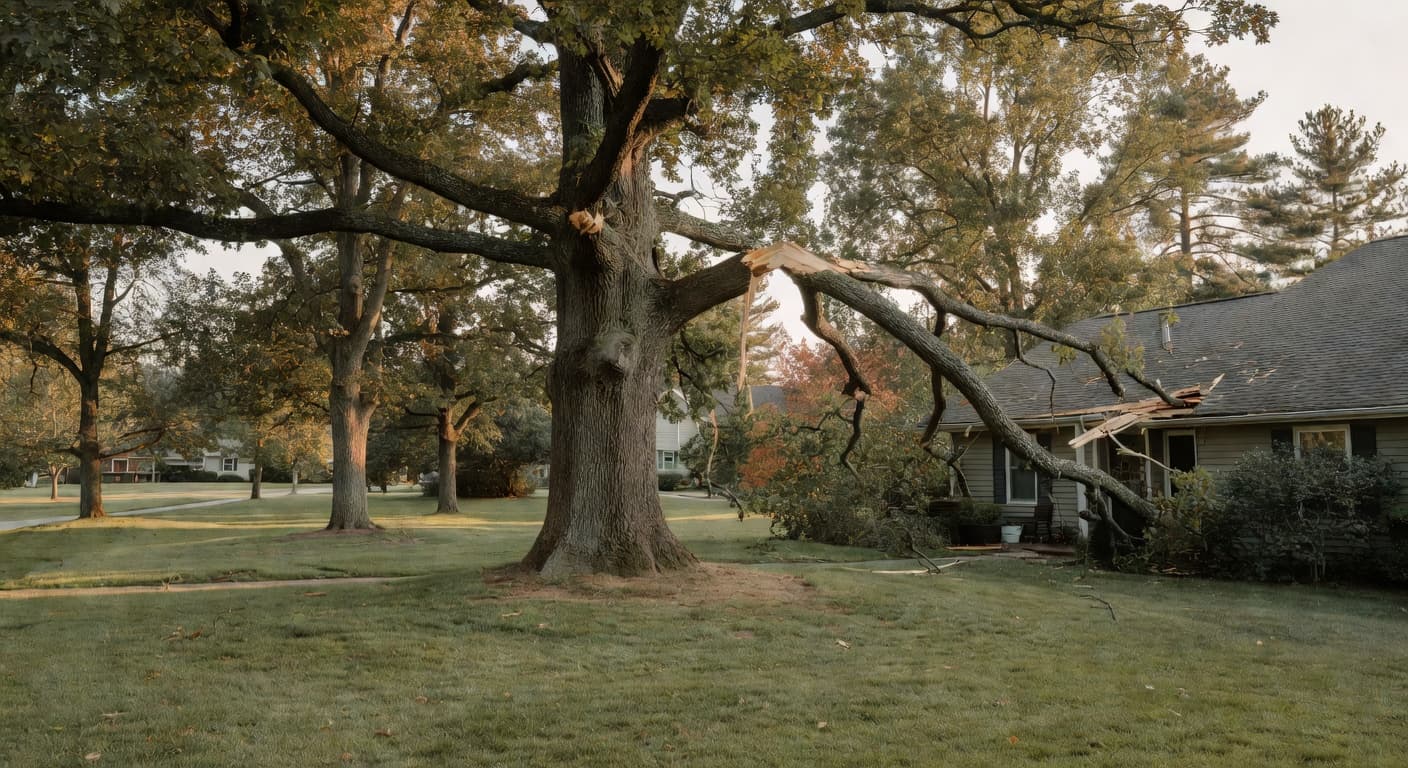
If any branch is suspended or partially attached, treat the area as restricted until a crew can secure it. This is where a quick professional opinion prevents emergency pricing later.
Your 30-Minute Spring Tree Inspection Checklist
Use this in order. Start with trees closest to people, parking, roofs, and play areas.
1. Target Zone Scan (5 minutes)
Walk your property and mark trees that can strike:
- your home, garage, shed, fence, or deck
- a neighbor's structure
- driveway parking areas
- public sidewalks or roads
- utility lines
Ask: if this limb or tree fails in a storm, what gets hit first?
Priority trees are not always the largest trees. A medium tree over a driveway can be higher risk than a large backyard tree with open fall zone.
2. Trunk and Main Stem Check (7 minutes)
Look for:
- vertical cracks deeper than bark texture
- splitting at major branch unions
- cavities or hollows with soft wood edges
- missing bark patches with dark staining
- fungal conks or mushrooms at the base
What it usually means:
- cracks and unions suggest structural weakness
- cavities indicate internal decay pathways
- base fungi can indicate root or butt-rot risk
If a crack has changed since last season, escalate quickly. Rapid change is often more important than size.
3. Canopy and Branch Structure (8 minutes)
Stand back at two angles and compare canopy balance.
Check for:
- dead limbs without buds
- one-sided canopy thinning
- crossing limbs that rub and wound each other
- codominant stems with narrow included bark
- broken tops after winter storms
Use a simple rule:
- deadwood over open lawn can be scheduled
- deadwood over occupied zones is urgent
If you are unsure whether a branch is alive, lightly scratch a small twig tip with a fingernail from the ground. Green beneath bark suggests live tissue; brown and dry suggests dieback.
4. Root Zone and Base Stability (5 minutes)
Inspect the soil ring around the tree:
- fresh soil heaving on one side
- exposed roots after erosion
- girdling roots pressing into trunk flare
- recent trenching or hardscape work in root zone
A small lean that is stable for years may not be urgent. A new lean plus soil movement is a different story and should be assessed soon.
5. Seasonal Health Indicators (5 minutes)
In late April through May, compare trees of similar species nearby.
Watch for:
- delayed leaf-out relative to neighbors
- sparse early canopy development
- unusual shoot dieback at branch tips
- persistent branch-end buds that fail to open
Delayed leaf-out alone is not a removal trigger. It is a "watch and verify" signal that should be paired with structural findings.
Lansing-Specific Red Flags We See Often
In Lansing and nearby communities, these patterns show up repeatedly during spring calls:
Maple limb overload after wet snow
Large lateral maple limbs with previous pruning cuts can crack after heavy, wet snow events. These usually need reduction pruning and weight management, not just random tip cuts.
Ash decline progression
Even treated ash can decline after stress years. Dead upper canopy, bark splitting, and brittle lateral failures deserve quick assessment before summer storms.
Spruce and pine edge stress near roads
Salt spray and plow runoff can weaken needles and branch vitality. These often look cosmetic early, then become structural after repeated winters.
Property-line surprises
- shared boundary trees are common in older Lansing lots
- homeowners often discover defects only when neighbors report falling limbs
- document conditions with date-stamped photos before disputes start
Decision Framework: Monitor, Prune, or Remove
Use this framework after your checklist.
Monitor
Use when:
- no active cracks or hanging limbs
- canopy is mostly healthy
- no fresh root-zone movement
- issues are cosmetic or minor
Action:
- re-check in 8-12 weeks
- keep photo log for comparison
- include tree in next seasonal maintenance plan
Prune
Use when:
- deadwood exists but trunk is stable
- clearance is needed over driveways, roofs, or walkways
- branch structure needs correction before storm season
Action:
- schedule structural pruning with tree trimming and pruning
- ask for clear scope: deadwood, clearance, weight reduction, and cleanup
- request what should be revisited in 12 months
Remove
Use when:
- trunk splitting is active
- significant decay compromises structure
- root-zone failure or new lean threatens targets
- repeated failures continue after prior pruning
Action:
- request removal and stump plan with tree removal
- document urgency factors for insurance conversations
- plan replacement strategy for shade and drainage impact
What to Photograph Before Calling for Quotes
Good photos speed up accurate estimates and reduce back-and-forth.
Capture:
- full-tree profile from two directions
- close-up of crack, cavity, fungus, or branch defect
- base/root flare and surrounding soil
- nearby structures or target zones
- access route for equipment (gate width, fences, overhead obstructions)
Also note:
- approximate trunk diameter at chest height
- whether power lines are involved
- whether the site is soft, sloped, or fenced
Better documentation helps providers scope labor, equipment, and risk correctly.
Quote Comparison Checklist for Homeowners
When comparing bids, avoid choosing by price alone. Confirm each quote addresses the same work.
Ask every provider:
- What exact defects are driving your recommendation?
- Is pruning sufficient, or is removal safer?
- How will debris and wood disposal be handled?
- Is stump grinding included or separate?
- What access constraints affect equipment choice?
- Are insurance and licensing details documented?
- What is the expected timeline after approval?
For stump decisions after removal, this guide helps compare scope and cleanup: How to Choose a Stump Grinding Company in Mid-Michigan.
Common Mistakes That Increase Risk and Cost
Waiting for leaves to hide defects
By midsummer, branch architecture is harder to inspect. Spring is the better visibility window.
Treating every issue as emergency or non-issue
Overreacting leads to unnecessary work. Underreacting leads to avoidable emergency calls. Use the monitor/prune/remove framework.
Accepting vague estimates
A quote that says "trim tree" without scope creates confusion and disputes. Require line-item detail.
Ignoring neighboring trees that can hit your property
You cannot maintain a tree you do not own, but you can document risk and start communication early.
Segment-Fit Next Step for This Article
If you found this checklist useful, you are likely in the unaware-to-problem-aware stage: you are not necessarily shopping for immediate removal, but you want to avoid a costly surprise.
A low-pressure next step is a spring walk-through and scoped recommendation. That gives you:
- a clear priority list
- a better maintenance budget
- fewer emergency decisions during storm season
Start with your photos and checklist notes, then request an estimate when you are ready. You can also browse our guides for related homeowner planning resources.
Quick Recap
For Lansing and Mid-Michigan homes, the spring inspection priority order is:
- targets and fall zones
- trunk and major unions
- canopy deadwood and balance
- root-zone stability
- seasonal health indicators
If your inspection reveals active cracks, hanging limbs, or new lean toward occupied space, move the issue out of monitoring and into scheduled professional work. Spring timing gives you better scheduling, better pricing control, and safer outcomes before peak storm activity.