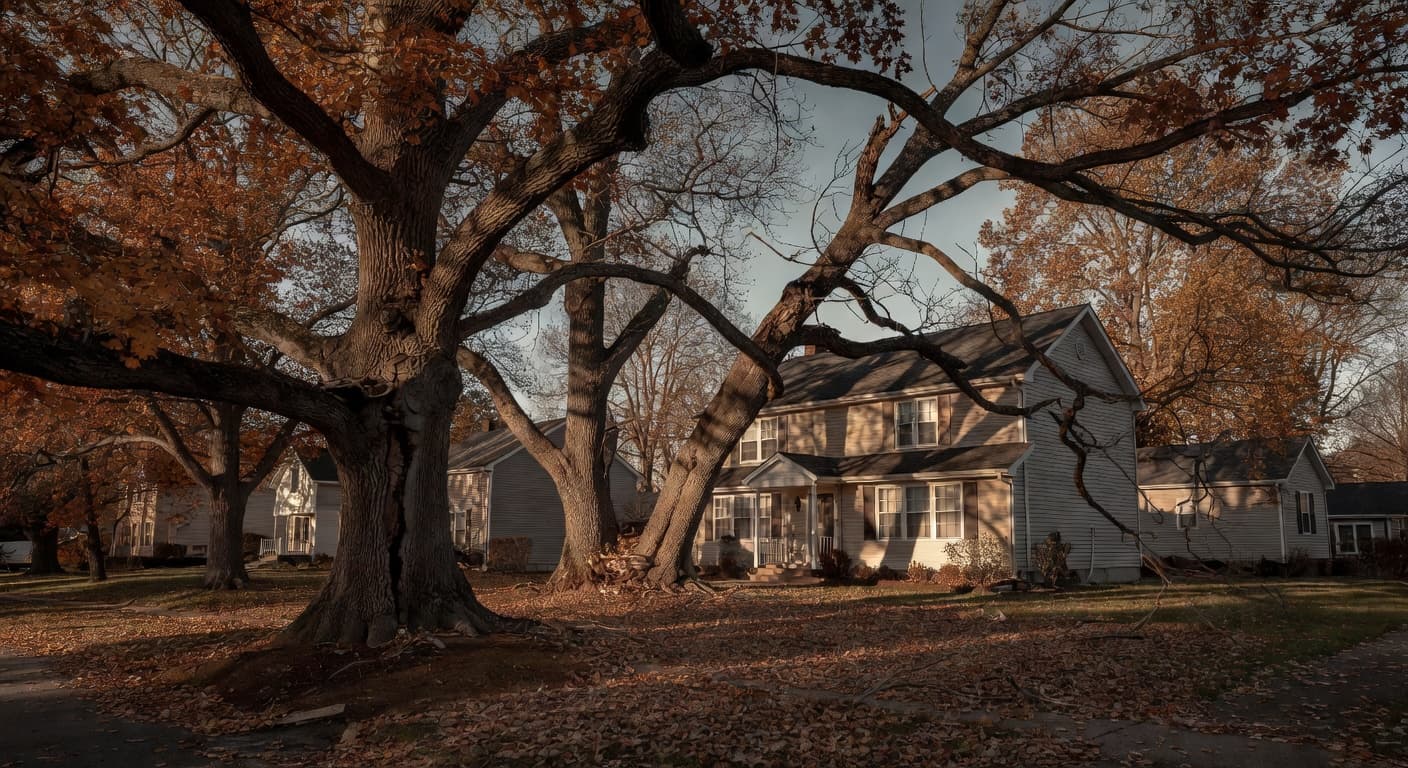
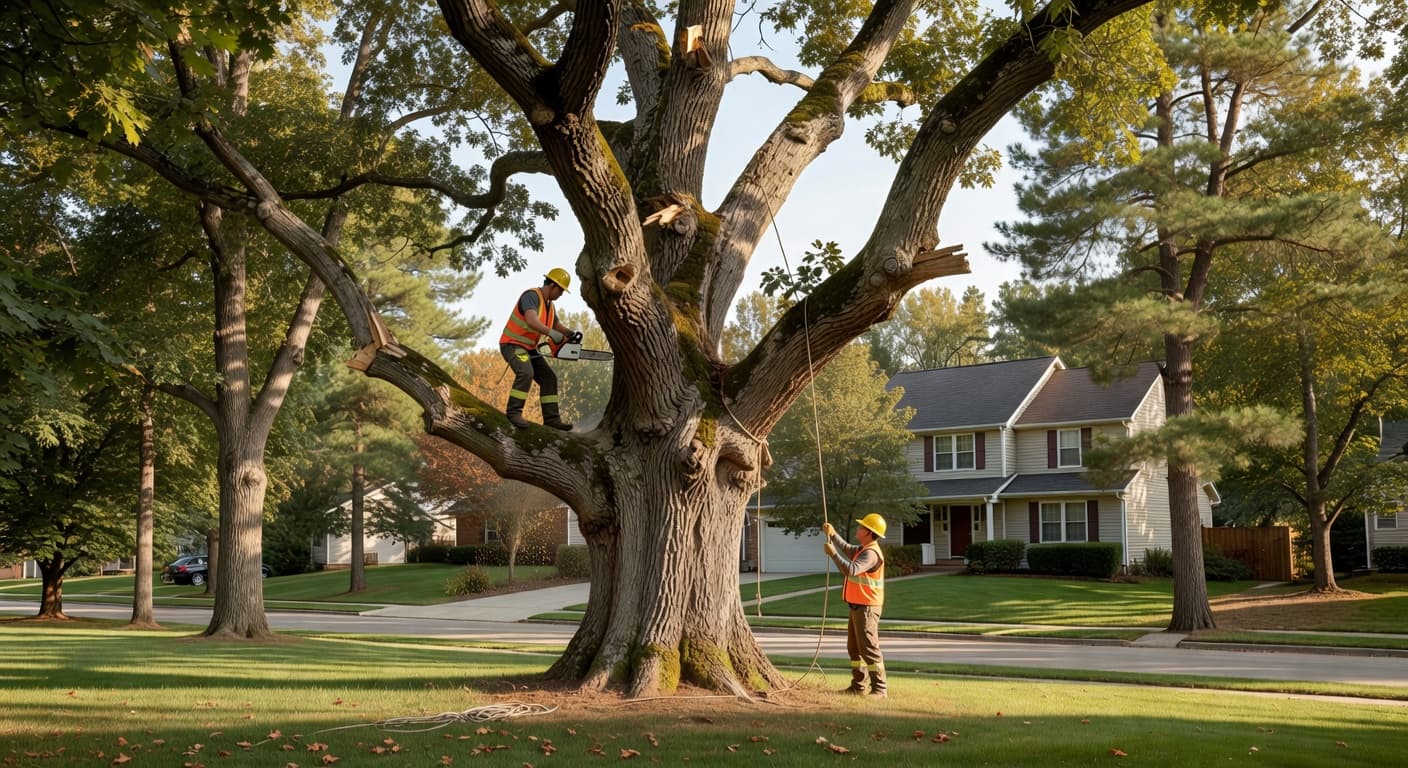
Myth: You Can Leave a Dead Tree Standing if It Looks Stable
A dead tree can look solid while becoming brittle, unstable, and dangerous. Learn the warning signs and when Michigan homeowners should act.
The Myth
"The tree is dead, but it still looks stable, so it can wait."
That is a risky assumption. A dead tree may stand for months or years, but that does not mean it is safe. Once a tree dies, the wood, limbs, roots, and trunk all begin losing strength. The danger often grows quietly until wind, snow, ice, or decay exposes it.
If a dead tree is near a house, driveway, fence, garage, sidewalk, play area, or power line, it should be inspected. Waiting can turn a planned tree removal into an emergency.
Concerned About a Dead Tree?
Call or text today. We'll assess your trees, explain your options, and give you a fair price. No pressure. No obligation.
Serving Onondaga, Lansing, and all of Mid-Michigan - same-day responses
Why Dead Trees Become Unpredictable
Living trees move and flex. Their roots anchor them, their limbs respond to wind, and healthy wood has strength. A dead tree is different. It no longer repairs damage or moves moisture through the structure.
Over time, dead trees can develop:
- brittle limbs
- trunk cracks
- hollow sections
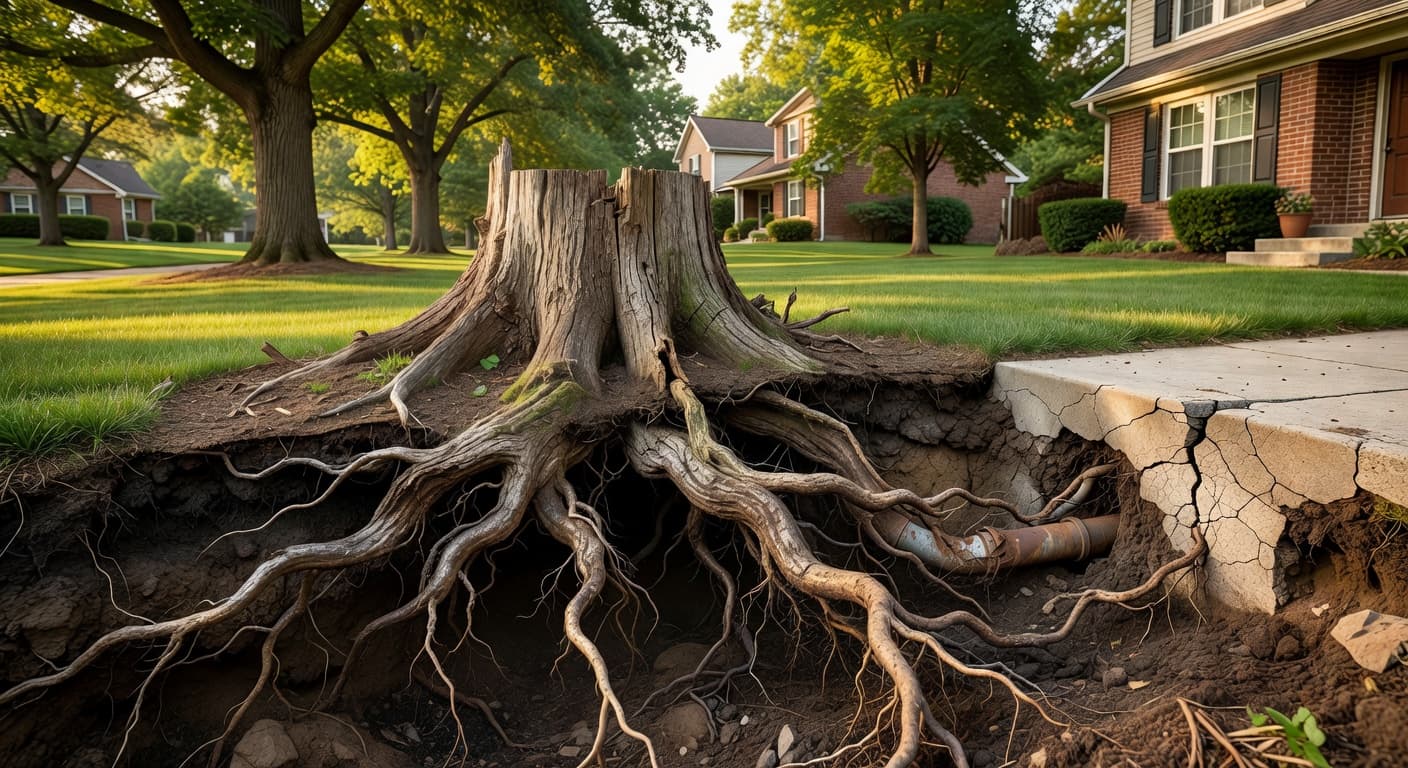
- root decay
- bark loss
- fungal growth
- insect activity
- weakened branch unions
The outside may still look like a normal tree while the inside is breaking down.
That is why a dead tree that "has not fallen yet" is not proof of safety. It may simply not have faced the right wind, weight, or failure point yet.
The Biggest Risk Is Not Always the Whole Tree Falling
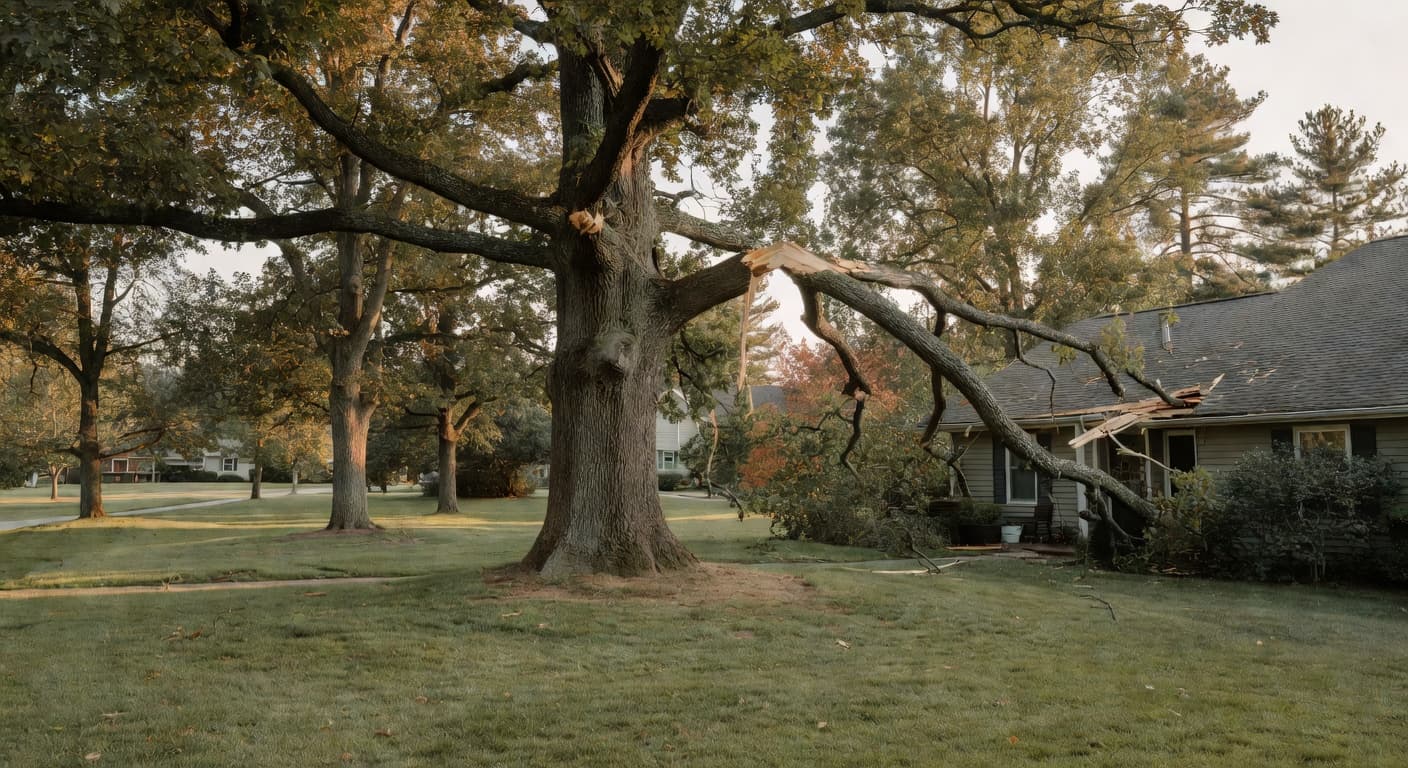
Many homeowners picture the entire tree crashing down. That can happen, but smaller failures are often the first problem.
A dead tree may drop:
- large limbs
- top sections
- bark slabs
- branches during light wind
- debris after snow or ice
Those failures can damage roofs, vehicles, fences, sheds, and landscaping. They can also injure people walking, mowing, parking, or playing near the tree.
If limbs are already falling, the tree is giving you a warning.
Warning Signs to Look For
Do not climb the tree or stand under dead limbs to inspect it. Look from a safe distance.
Watch for:
- no leaves during the growing season
- bark falling off
- mushrooms or fungus at the base
- cracks in the trunk
- sawdust or insect activity
- hollow-sounding trunk
- dead limbs over a target
- leaning that has changed
- soil lifting near the roots
- branches breaking in mild weather
Our broader guide to warning signs a tree may fall covers these symptoms in more detail.
Why Michigan Weather Makes Dead Trees Worse
Mid-Michigan weather adds stress. Freeze-thaw cycles, wet snow, thunderstorms, and high winds all test weak wood.
A dead limb that survived summer may snap under ice. A decayed root system may shift after saturated soil. A brittle top may break during a wind gust that a healthy tree would handle.
This is why dead trees near targets should not be treated as background scenery. They are changing over time, even when the change is hard to see.
When a Dead Tree Can Wait
Some dead trees are lower risk. For example, a small dead tree in an open field far from people, structures, driveways, and utilities may not be urgent.
Even then, it is worth thinking about:
- where it could fall
- whether mowing or equipment passes nearby
- whether it could hit a fence or neighboring property
- whether pests are spreading
- whether removal will get harder later
Waiting is a decision. It should be based on risk, not hope.
When You Should Act Soon
Schedule an inspection or estimate soon if the dead tree is:
- near your home
- leaning toward a target
- close to a driveway
- over a sidewalk or play area
- near a garage or shed
- dropping limbs
- showing trunk cracks
- touching or near wires
- large enough to cause serious damage
The closer the tree is to something valuable, the less sense it makes to delay.
Why Removal Can Cost More Later
Dead trees can become more dangerous to remove as they decay. Brittle limbs, weak trunks, and unstable roots may require more careful equipment and planning.
That can increase:
- labor time
- equipment needs
- cleanup complexity
- risk to nearby structures
- emergency scheduling costs
Planned removal is usually easier to manage than urgent removal after the tree has already failed.
For pricing context, see our guide to tree removal costs in Lansing and Mid-Michigan.
Need Tree Removal?
Learn more about our professional tree removal service in Onondaga, Lansing, and Mid-Michigan - or call for a free estimate.
Dead Tree FAQ
How long can a dead tree stand?
There is no safe universal timeline. Some dead trees stand for years. Others fail quickly because of decay, pests, root damage, wind exposure, or soil conditions. The question is not how long it can stand. The question is what it can hit when it fails.
Is a dead tree always an emergency?
No. A small dead tree in an open area may be low urgency. A large dead tree over a driveway, roof, garage, fence, or walkway is different. Location and targets determine urgency.
Can trimming make a dead tree safe?
Sometimes removing dead limbs can reduce immediate risk, but trimming does not restore a dead tree to health. If the trunk or root system is compromised, removal may be the safer long-term answer.
Will insurance cover dead tree damage?
Coverage depends on the policy, the circumstances, and whether the tree was known to be hazardous before it failed. If a dead tree is already visible and near a target, waiting can create avoidable risk. Document the condition and ask your insurance agent if you are unsure.
What a Professional Looks At
A professional tree-service estimate should consider:
- tree size
- lean direction
- trunk condition
- root condition
- nearby targets
- access for equipment
- debris handling
- stump grinding
- whether removal is urgent
The goal is not to scare you into removing every imperfect tree. The goal is to separate manageable tree-health issues from real safety risks.
How to Prioritize Multiple Dead Trees
If you have more than one dead tree, start with the one closest to people and structures.
Priority usually follows this order:
- Trees near homes, garages, driveways, and sidewalks.
- Trees near power lines, fences, sheds, or neighboring property.
- Trees in areas where people mow, park, or play.
- Trees in open areas with little chance of hitting anything.
That approach helps you control risk even if the whole property cannot be handled at once.
The Bottom Line
A dead tree that still stands is not automatically stable. It may be losing strength in the limbs, trunk, or roots while looking mostly unchanged from the ground.
If the tree could hit people, buildings, vehicles, fences, or access areas, get it inspected before weather makes the decision for you.
Stump Busters provides tree removal, trimming, stump grinding, and cleanup across Lansing, Onondaga, Eaton County, and Mid-Michigan. Call (517) 202-3840 or request a free estimate for a dead-tree assessment.