Is My Tree Dying? 8 Symptoms Michigan Homeowners Ignore Until It's Too Late
Your tree is sending distress signals you're probably missing. Here are the 8 warning signs of a dying tree - and what to do before it becomes a hazard.
The Tree Death Spiral
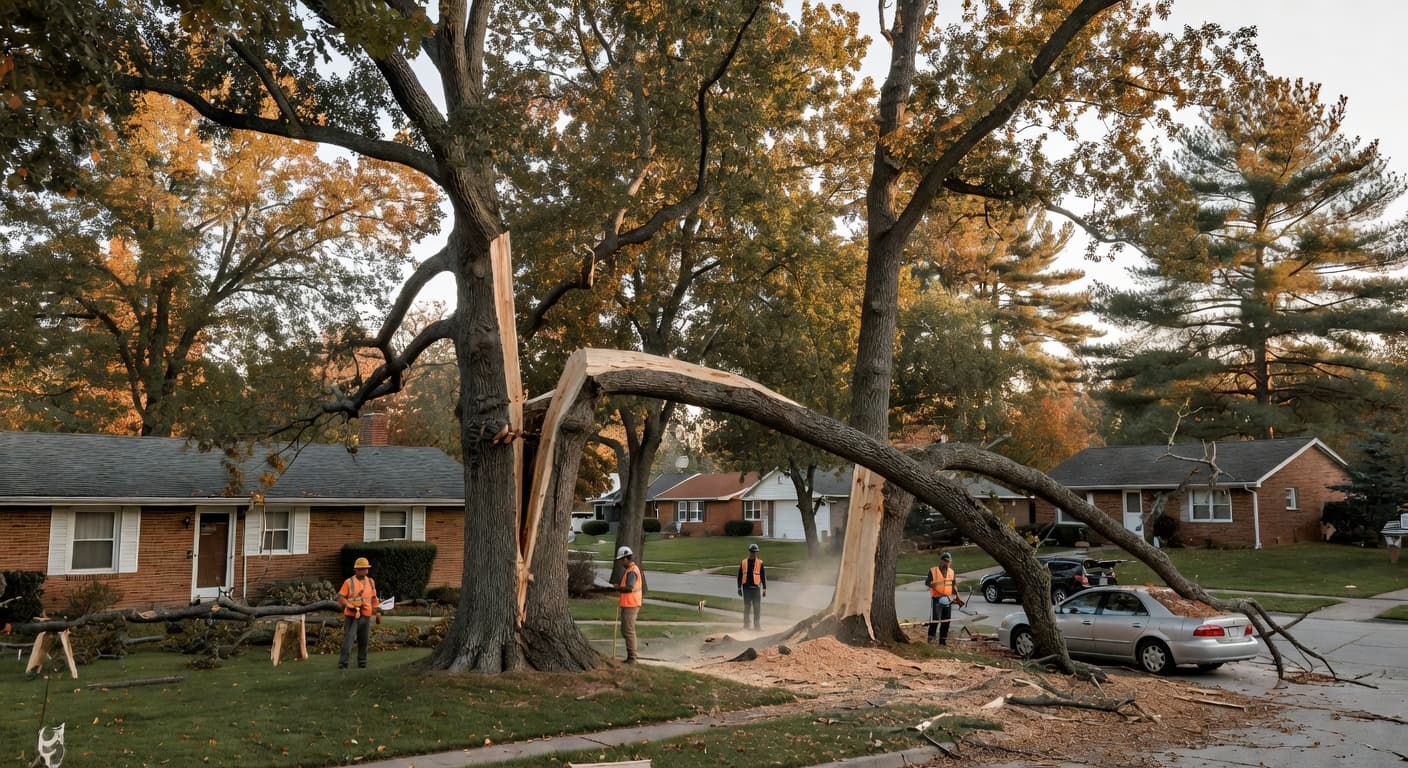
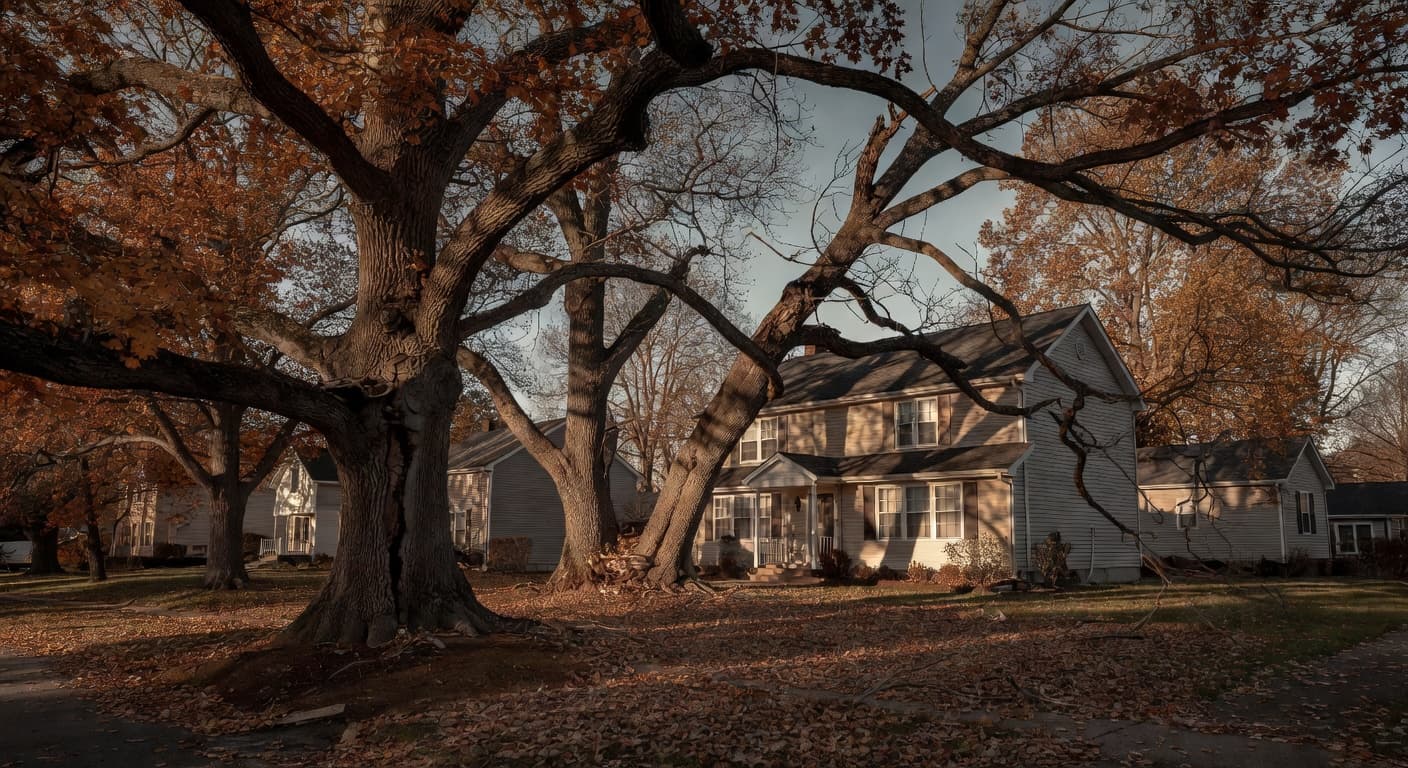
Trees die slowly. Not overnight. That majestic oak in your yard that's been there for 60 years doesn't just keel over one Tuesday afternoon. It sends warning signals for months, sometimes years, before it finally fails.
The problem? Most homeowners don't know what to look for. By the time you notice something's wrong, the tree is often past the point of saving - and it's become a danger to your home and family.
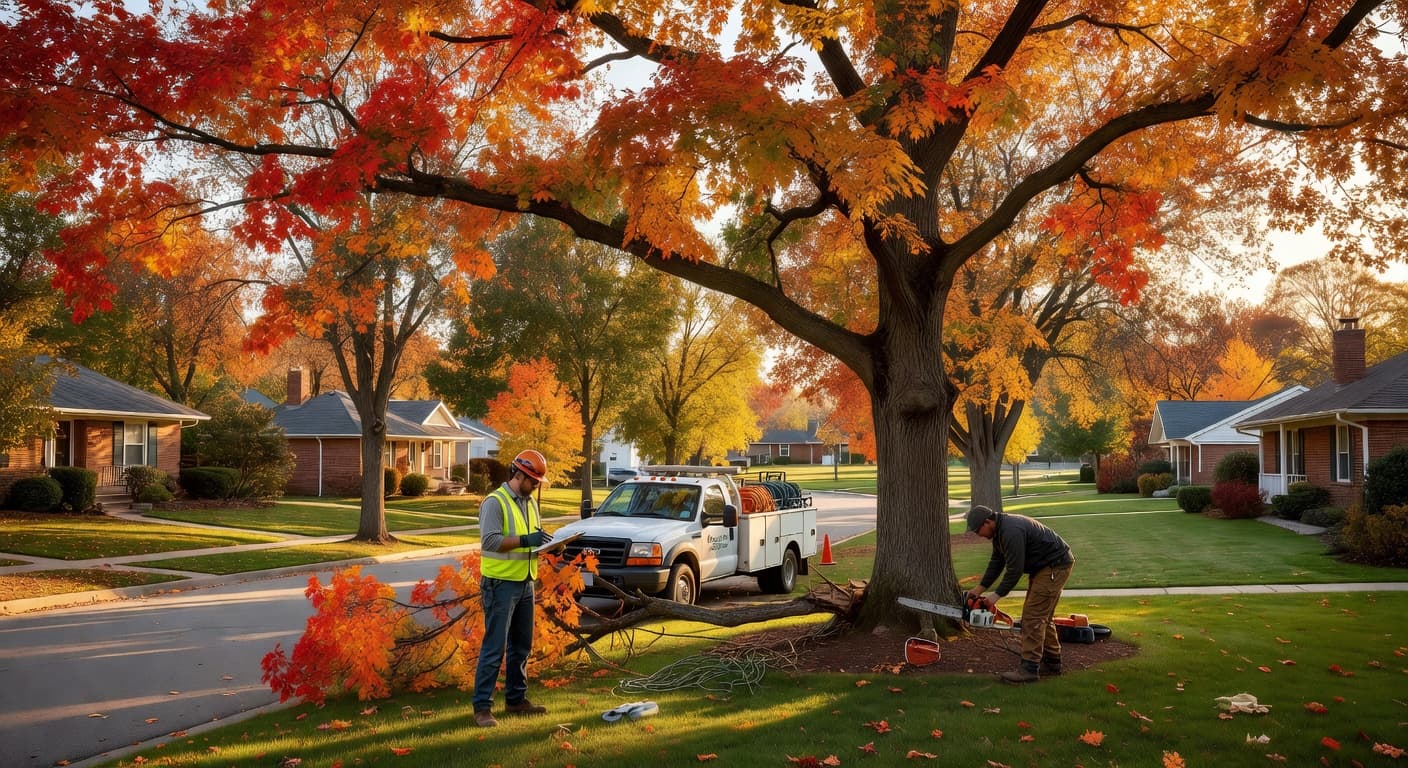
After 20+ years of tree work across Mid-Michigan, we've seen the same pattern repeat: homeowners call us after a tree has been declining for 2-3 years. "I thought it was just having a rough season," they say. Meanwhile, that "rough season" was actually the beginning of the end.
Here are the 8 symptoms we see ignored most often - and what they mean.
Warning Sign #1: Leaf Discoloration That Isn't Seasonal
What to Look For:
- Yellowing leaves in summer (not fall) - called chlorosis
- Browning edges or tips while the rest stays green
- Spotted or mottled discoloration - random patches of different colors
- Leaves smaller than usual for that species
- Leaves dropping early - weeks or months before normal fall timing
What It Means:
Yellowing in growing season usually signals:
- Root damage - construction, soil compaction, or root rot
- Nutrient deficiency - iron, nitrogen, or manganese shortage
- Water stress - too much or too little
- Girdling roots - roots circling and choking the trunk
The danger: Discolored leaves mean the tree isn't photosynthesizing efficiently. It's slowly starving. Worse, stressed trees attract insects and disease.
Real example: We removed a 40-foot maple in Lansing last year that had been yellowing for two seasons. The homeowner thought it was "just a maple thing." The tree was actually suffering from verticillium wilt - a fatal fungal disease. By the time they called, it was too late, and the root rot had started spreading to nearby trees.
Warning Sign #2: Bark Peeling, Cracking, or Shedding in Sheets
What to Look For:
- Bark coming off in large plates or sheets
- Vertical cracks running up the trunk
- Areas where bark is completely gone - smooth wood exposed
- Discolored bark - dark patches, fungal growth
- Soft or spongy spots when you press the bark
What It Means:
Bark is a tree's skin. When it fails:
- Internal decay - the cambium layer is dying underneath
- Fungal infection - various cankers and rots
- Physical damage - lawnmower strikes, sunscald, freeze damage
- Boring insects - beetles tunneling under the bark
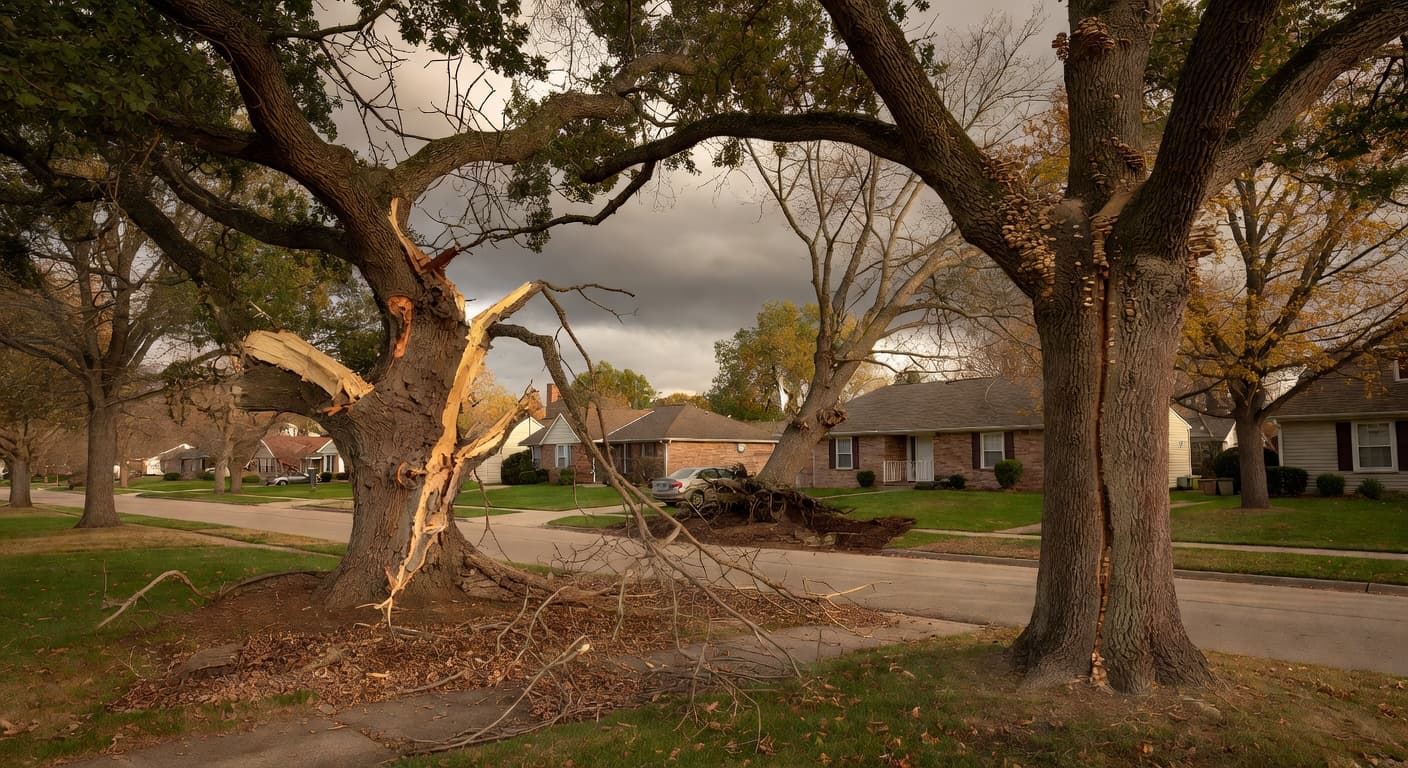
The danger: Once bark falls off, the tree can't transport nutrients or seal wounds. The exposed wood becomes an entry point for disease and insects. That vertical crack? It's a structural failure waiting to happen in the next storm.
Seeing Bark Damage? Get It Checked Now.
Warning Sign #3: Canopy Thinning or "See-Through" Crown
What to Look For:
- You can see sky through the canopy where you couldn't before
- Fewer leaves overall - the tree looks sparse
- Dieback starting at the top - crown thinning from the tips inward
- One side of the canopy declining while the other looks healthy
- Interior branches bare while outer ones have leaves
What It Means:
Canopy decline is often the last visible symptom of a problem that's been brewing for years:
- Root system failure - rot, girdling, or construction damage
- Vascular disease - something blocking nutrient flow
- Soil issues - pH problems, compaction, toxicity
- Age-related decline - some species have limited lifespans
The danger: A thinning canopy means the tree has lost structural mass. It's weaker in wind. Dead upper branches ("widowmakers") fall without warning. Read about warning signs your tree could fall.
Michigan-specific: Our ice storms exploit canopy-thinning trees. The reduced structure accumulates ice unevenly, causing sudden branch or trunk failure.
Warning Sign #4: Fungal Growth on Trunk, Roots, or Base
What to Look For:
- Mushrooms or shelf fungi growing on the trunk or base
- Conks - hard, shelf-like fungal bodies
- White, fan-shaped fungal mats under bark (especially oaks)
- Stringy, black fungal growth at the base
- Fruiting bodies on exposed roots
What It Means:
Fungi are nature's decomposers. When you see mushrooms on a tree, the fungus is actively breaking down wood internally. That "shelf fungus" on the side? It's the fruiting body of a rot that's been eating the tree from the inside out.
Specific dangers in Michigan:
- Ganoderma - shelf fungus on hardwoods, indicates internal heart rot
- Honey fungus - clusters at the base, causes root rot and white rot
- Oak Wilt - fungal mats under bark cracks, spore-producing (learn about safe pruning times for oaks)
- Armillaria - honey-colored mushrooms at base, root rot
The rule: Any significant fungal growth on a standing tree means decay. The tree is compromised.
Free Guide: Michigan Tree Diseases Photo ID
Download our field guide showing common tree diseases in Mid-Michigan with photos and descriptions. Know what you're looking at.
Warning Sign #5: Sudden or Progressive Lean
What to Look For:
- Tree visibly tilting when it was straight before
- Lean getting worse over weeks or months
- Roots heaving on one side - soil mounding
- Cracking soil on the opposite side of the lean
- Interior canopy dying on the side opposite the lean
What It Means:
A leaning tree isn't just "growing toward the sun." That's a myth. Trees lean because:
- Root failure on one side - rot, damage, or severance
- Structural failure in the trunk - internal decay causing collapse
- Windthrow - root system lifting in saturated soil
- Construction damage - roots cut on one side
The danger: A leaning tree is actively failing. It can fall with little warning - no storm required. We've removed trees that fell on calm days just from the weight of their own canopy pulling on compromised roots.
Measurement test: Stand at the base and look up. If you can't see the center of the trunk because the tree leans away from you, call a professional immediately.
Warning Sign #6: Deadwood - Branches Without Leaves or Bark
What to Look For:
- Branches with no leaves during growing season
- Brittle, dry branches - snap instead of bend
- No bark on sections of branch
- Fungal growth on dead branches
- Branches that look different - gray, weathered, while others are healthy
What It Means:
Some deadwood is normal - trees shed interior shaded branches. But excessive deadwood signals:
- Canopy decline - tree can't support all its branches
- Disease progression - vascular problems causing dieback
- Root problems - insufficient water/nutrients reaching upper branches
- Structural issues - weak attachment points failing
The "widowmaker" danger: Dead branches in the upper canopy are called widowmakers for a reason. They fall without warning - calm day, storm, middle of the night. We've seen 100-pound dead branches punch through roofs.
Rule: If you can see deadwood from the ground, it's hazardous. If it's over your house, driveway, or where people walk, it's an emergency.
Need Tree Removal?
Learn more about our professional tree removal service in Onondaga, Lansing, and Mid-Michigan - or call for a free estimate.
Warning Sign #7: Insect Damage or Heavy Infestation
What to Look For:
- Exit holes in the bark - tiny (boring beetles) or larger (borers)
- Sawdust-like frass at the base - insect waste
- Heavy ant trails - especially carpenter ants
- Bark bubbling or splitting - insects tunneling underneath
- Woodpecker damage - they're hunting insects inside the tree
- Caterpillar tents or webs - defoliating insects
What It Means:
Michigan has several tree-killing insects that move fast:
Emerald Ash Borer:
- Killed 30+ million ash trees in Michigan
- Tiny D-shaped exit holes
- Canopy dieback starting at the top
- Once you see symptoms, treatment is usually too late
Asian Longhorned Beetle:
- Targets maples and other hardwoods
- Large exit holes (pencil-sized)
- Sawdust at base
- Federal quarantine areas exist
Carpenter Ants:
- Don't eat wood, but tunnel in decaying wood
- Seeing them means internal rot
- Large black ants, sawdust piles
The cascade effect: Insects attack stressed trees. Once they're established, the tree declines faster, attracting more insects and disease. See real stories from homeowners who waited too long.
Warning Sign #8: Root Heave, Soil Mounding, or Grade Changes
What to Look For:
- Soil mounding on one side of the tree base
- Lifting sidewalk, driveway, or patio near the tree
- Exposed roots that weren't visible before
- Cracking or separation in soil around the base
- Recent construction within the drip line
What It Means:
Roots are 50% of the tree's structure. When they fail:
- Root rot - fungal decay eating anchor roots
- Girdling roots - roots circling the trunk, choking it
- Construction damage - roots cut or compacted
- Soil saturation - root drowning, structural instability
The hidden danger: You can't see 90% of a tree's root system. By the time you see soil changes at the surface, the damage below is severe.
Michigan-specific: Our heavy clay soils and freeze-thaw cycles stress root systems. Construction within the "critical root zone" (1 foot per inch of trunk diameter) almost always damages the tree long-term.
The Decision Tree: What To Do When You See These Signs
🚨 Emergency - Call Today:
- Sudden lean getting worse
- Large dead branches over structures
- Significant fungal growth + structural symptoms
- Bark splitting + canopy decline
⚠️ Urgent - Call This Week:
- Multiple symptoms present
- Progressive canopy thinning
- Deadwood in upper canopy
- Significant insect damage
📅 Schedule Assessment - Call This Month:
- One or two concerning symptoms
- Leaf discoloration without other signs
- Early fungal growth at base
- Root zone changes
👀 Monitor - But Document:
- Isolated dead branches
- Minor leaf discoloration
- Take photos, mark the date, watch for progression
See These Signs? Get a Free Tree Health Assessment.
Call or text today. We'll assess your trees, explain your options, and give you a fair price. No pressure. No obligation.
Serving Onondaga, Lansing, and all of Mid-Michigan - same-day responses
Can a Dying Tree Be Saved?
Sometimes. But you need to act early.
| Symptom Stage | Likely Outcome | Timeline |
|---|---|---|
| Early - leaf discoloration only | Often treatable | 1-2 years to act |
| Moderate - canopy thinning, some deadwood | Depends on cause | 6-12 months to act |
| Advanced - significant dieback, fungal growth, lean | Usually removal required | Immediate action needed |
| Terminal - major structural failure, extensive rot | Removal only option | Emergency |
What we can treat:
- Nutritional deficiencies
- Some fungal infections (if caught early)
- Insect infestations (if caught early)
- Girdling roots
- Soil compaction issues
What we can't fix:
- Advanced internal decay
- Extensive root rot
- Vascular diseases in late stages
- Structural failure
The hard truth: By the time most homeowners notice something's wrong, we're often past the treatment window. That's why annual tree inspections matter.
Prevention: The Annual Tree Check
Once a year, in early spring, walk your property and check:
- ✅ All trees for canopy density and color
- ✅ Trunks for bark damage, fungal growth, cracks
- ✅ Ground around bases for soil changes, mushrooms
- ✅ Upper canopy for dead branches (binoculars help)
- ✅ Any trees that lean or look "off"
Take photos. Compare year to year. Changes you notice in photos are often invisible to daily observation.
Call a pro if: You can't confidently say "this tree looks healthy"
We're Not Alarmists - We're Realists
Not every symptom means your tree is dying. Some trees have quirks. Some issues are treatable. But waiting to find out is the mistake that costs homeowners thousands.
Our approach:
- Honest assessment - we'll tell you if it's worth treating
- Clear documentation - photos and written reports for insurance
- Options explained - treatment vs. removal, with costs
- No pressure - you decide, we just give you facts
If you think your tree might be dying, don't wait. The earlier we catch it, the more options you have.
Call (517) 202-3840 for a free tree health assessment anywhere in Onondaga, Lansing, Mason, Holt, Okemos, Williamston, Charlotte, Eaton Rapids, and all of Mid-Michigan.
We'd rather tell you your tree is fine than remove one that could have been saved.