DIY Storm Cleanup vs Professional Tree Cleanup: What Mid-Michigan Homeowners Can Safely Handle
Compare DIY storm cleanup with professional tree cleanup so you know what is safe to handle yourself after a Mid-Michigan storm.
The Short Answer After a Storm
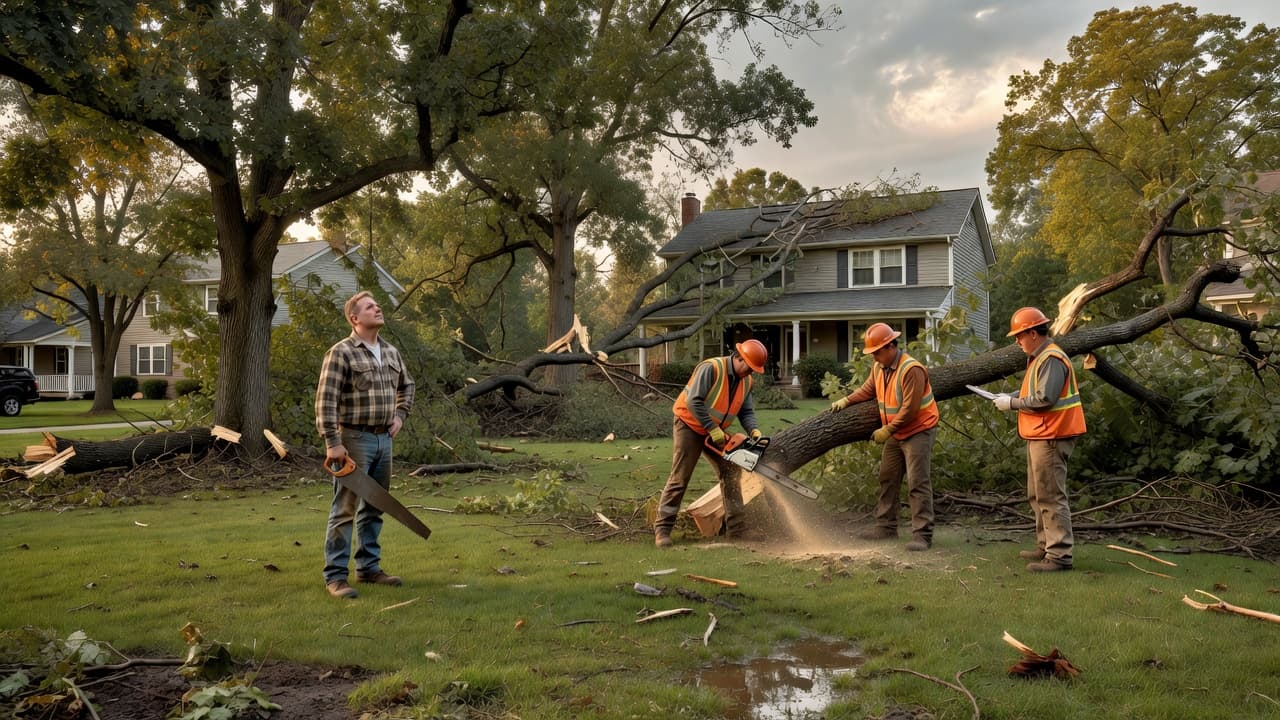
If the storm cleanup is limited to light yard debris on open ground, DIY cleanup may be fine. If the job involves hanging limbs, cracked trunks, ladders, chainsaws, roof contact, power lines, or heavy wood under tension, it is professional cleanup territory. The mistake homeowners make is treating all storm mess like yard work. Some of it is yard work. Some of it is emergency hazard removal wearing a yard-work disguise.
This guide is for Mid-Michigan homeowners who want to save money where it is reasonable without turning storm cleanup into a trip to the ER or a much larger property-damage bill. By the end, you should know what is safe to bag and drag, what needs caution, and what should trigger a call right away.
Not Sure If Your Storm Cleanup Is Safe to DIY?
Call or text today. We'll assess your trees, explain your options, and give you a fair price. No pressure. No obligation.
Serving Onondaga, Lansing, and all of Mid-Michigan - same-day responses
Why This Decision Is Harder Than It Looks
Storm cleanup feels straightforward because the first thing you see is a mess. Branches are down, leaves are everywhere, the driveway is blocked, and you want the property back to normal.
But storm debris is not all the same:
- some branches are dead and loose
- some are bent and holding stored tension
- some are still attached and loaded against other limbs
- some are resting on fences, roofs, or structures
- some are near service drops or utility lines
The visual clutter makes homeowners underestimate the hidden risk. That is why the right question is not "Can I physically lift this?" It is "What happens if this piece shifts while I am touching it?"
What DIY Cleanup Usually Includes Safely
DIY cleanup can make sense when the work stays low-risk and fully on the ground.
Examples:
- raking leaves and twigs
- picking up small branches you can move comfortably
- clearing light debris from open lawn areas
- bundling brush that is clearly detached and not under tension
- moving yard clutter away from drains or walkways
This kind of cleanup is often fine if you wear gloves, sturdy footwear, and work in daylight. It can help you restore order quickly without paying for work that does not need a crew.
What Changes the Job From DIY to Hazard Work
The job stops being basic cleanup when any of these are true:
A limb is still attached
A partially broken limb can shift without warning. What looks stable from the ground may be one gust or one cut away from dropping.
The debris is elevated
Once ladders, roofs, or elevated cuts enter the picture, the risk jumps fast. Wet shingles and unstable branches are a bad combination.
There is visible tension or compression
Wood pinned under another limb or bent awkwardly stores energy. When cut, it can spring, twist, or roll.
The trunk is split or leaning
At that point, you are not cleaning up. You are dealing with tree failure.
Anything is near utilities
Even if the line looks insulated or harmless, do not guess.
For emergency first steps, see A tree fell in my yard - what do I do first?.
A Practical Comparison: DIY vs Professional
Cost
DIY looks cheaper because your labor is free. That only stays true if the job is genuinely low-risk and does not create injury, roof damage, tool damage, or a second cleanup problem.
Professional cleanup costs more upfront, but it buys you:
- safer cutting and rigging
- faster debris removal
- equipment for heavy wood
- a cleaner property reset
- less chance of damaging fences, roofs, gutters, or landscaping during the cleanup itself
Speed
For a few piles of brush, DIY can be faster because you can start immediately. For anything more complicated, homeowners often underestimate how long it takes to cut, drag, stack, and dispose of storm wood safely.
Risk
This is the main difference. DIY risk increases sharply once the debris is large, elevated, tension-loaded, or near structures. That is where professional cleanup earns its value.
Property protection
A good crew is not just removing debris. They are thinking about what the debris can hit on the way down or out.
What Homeowners Can Check Before Deciding
Walk the property slowly and answer these questions:
- Is every piece fully on the ground and detached?
- Is there any roof, fence, or shed contact?
- Are any limbs hanging above head height?
- Does any wood look twisted, pinned, or bent?
- Is the ground soft enough that dragging logs will tear up the yard badly?
- Do you have a safe disposal plan for what you move?
If you answer "yes" to the structure, height, tension, or utility questions, the job is moving out of DIY territory.
Mid-Michigan Conditions That Raise the Risk
Storm cleanup in this region is shaped by a few local realities:
Wet ground
After hard rain, lawns get slick and equipment or ladders get less stable. Even dragging brush becomes more awkward and tiring.
Mature maples and ash
These species can drop surprisingly heavy sections, especially if they were already stressed.
Repeated storm cycles
One storm may weaken a branch that does not come down until the next event. Homeowners often think the danger passed because the first storm is over.
Rural driveways and backyard access
On larger properties, the hardest part is not the cutting. It is the hauling.
The Most Common DIY Mistakes
Here are the problems crews see after homeowners start with good intentions:
- cutting from a ladder
- pulling on a hung branch with a rope
- working too close to service lines
- underestimating the weight of wet wood
- dragging debris across gutters, siding, or AC units
- cleaning the visible mess while ignoring the cracked branch still overhead
The biggest issue is that the cleanup focuses on convenience instead of the hazard order.
A Better Decision Framework
DIY it
Choose DIY only if the debris is small, detached, ground-level, and far from structures or lines.
Document it and wait for help
If the property is safe enough to leave alone for a few hours, photograph the scene and avoid touching the risky pieces.
Call now
Call for professional help if:
- a branch is hanging or partially attached
- the trunk is cracked or leaning
- the roof or fence has been hit
- access is blocked by heavy wood
- you need chainsaw work in a tight area
If the event also caused property damage, combine cleanup with the insurance documentation steps in our storm damage claim guide once that article is live, or use our current insurance tree removal guide.
When the safe answer is "call a crew," Stump Busters' property cleanup service is the best fit for storm debris, downed limbs, and post-storm site cleanup.
For a simple follow-up inspection after the debris is clear, use the Michigan homeowner's tree safety checklist to spot remaining hazards.
What Professional Cleanup Should Include
A good cleanup estimate should clarify:
- what hazards are being removed first
- whether debris haul-away is included
- whether roof-safe or structure-adjacent work is part of the scope
- whether additional tree work is recommended after the immediate cleanup
That last point matters because storm cleanup sometimes reveals a second problem, like a trunk crack or declining canopy, that still needs attention after the yard looks cleaner.
The Bottom Line
DIY storm cleanup can save money when the work is truly basic: detached sticks, light brush, and open-ground debris. Professional cleanup is the smarter move when the wood is heavy, elevated, attached, twisted, or near anything valuable. In Mid-Michigan, storm mess often looks more manageable than it really is because wet wood, soft ground, and mature trees hide the risk until you start moving things.
If you want the practical rule, use this one: if the cleanup needs judgment more than muscle, it probably needs a pro. Stump Busters can help you separate harmless debris from the hazard pieces so you are not paying for simple work or taking chances on the dangerous part.
Need Property & Storm Cleanup?
Learn more about our professional property & storm cleanup service in Onondaga, Lansing, and Mid-Michigan - or call for a free estimate.