Does Homeowner's Insurance Cover Tree Removal in Michigan?
Short answer: sometimes. Learn exactly when insurance pays for tree removal and when you're on your own, plus how to file a successful claim.
The Short Answer
Homeowner's insurance sometimes covers tree removal in Michigan. It depends on why the tree fell, what it damaged, and your specific policy.
Here's the breakdown:
| Scenario | Typically Covered? | Notes |
|---|---|---|
| Tree falls on your house/garage | ✅ Yes | Removal + damage repair |
| Tree falls on fence/shed | ✅ Usually | Check your policy limits |
| Tree falls on neighbor's property | ✅ Their insurance | Or yours if you're liable |
| Tree falls in yard, no structure | ❌ No | Preventive removal is your cost |
| Dead tree falls (neglect) | ❌ Often denied | Insurers may claim negligence |
| Storm/ice causes tree to fall | ✅ Usually | "Act of God" coverage |
Emergency? Call Us Now.
When Insurance DOES Cover Tree Removal
1. The Tree Damaged an Insured Structure
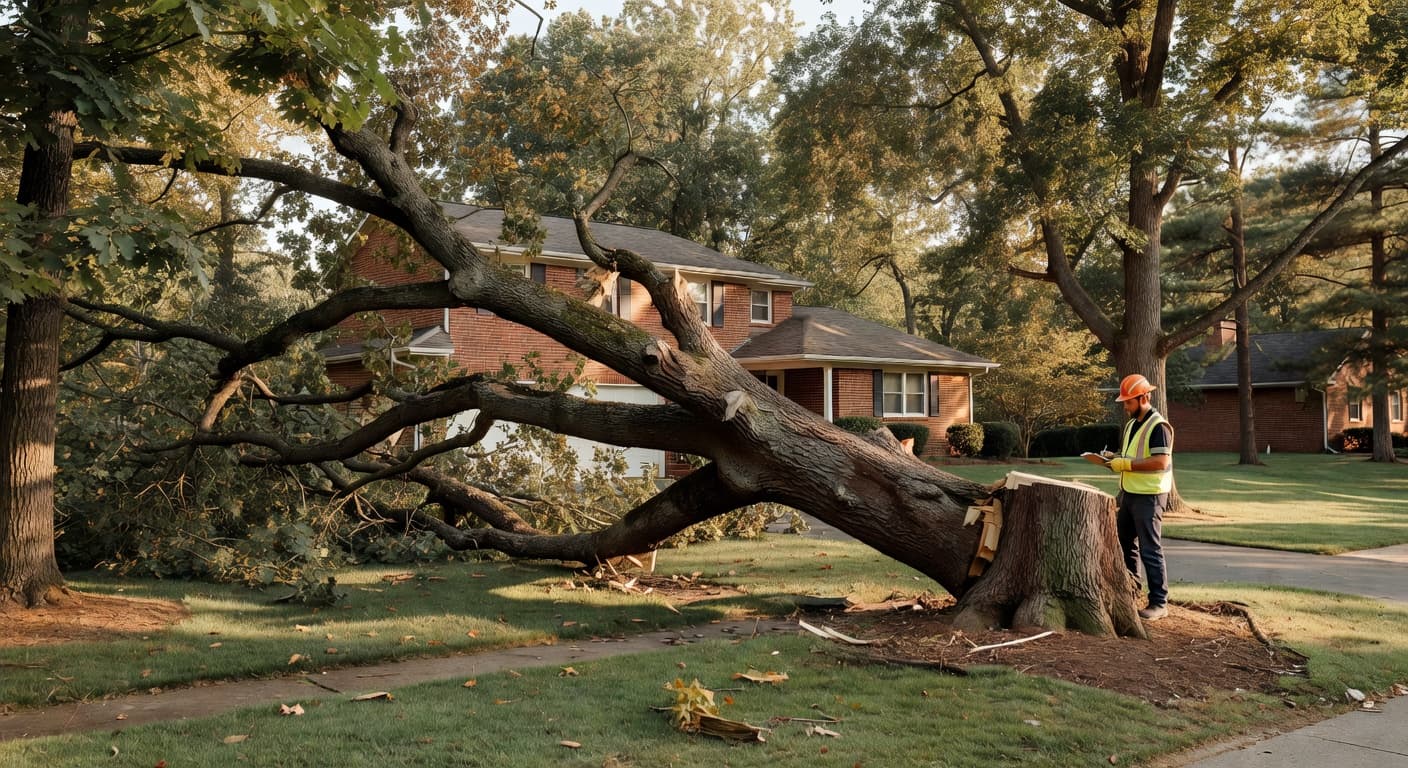
If a tree falls on your house, garage, fence, or shed, your policy's dwelling coverage or other structures coverage typically kicks in.
What they pay:
- Removing the tree from the structure
- Repairing the damage to the building
- Removing the tree debris from your property
- Usually up to a limit (commonly $500-$1,000 for tree removal, separate from damage repair)
Key detail: They cover removing the tree from the damaged structure, not necessarily removing the entire tree from your property if it fell harmlessly in the yard.
2. Storm, Lightning, or Ice Damage
Michigan winters and summer storms are "acts of God" - events outside your control. When these cause tree failure and damage, insurance typically responds.
Document everything:
- Photos of the tree before removal (if safe)
- Photos of the damage
- Weather reports showing the storm
- Keep receipts for any emergency repairs
3. Tree Falls on Neighbor's Property (Your Liability)
If your tree damages your neighbor's house and you're found liable (rare, but happens if you knew the tree was dead and did nothing), your liability coverage may handle it.
Most of the time, though, it falls under the neighbor's dwelling coverage regardless of whose tree it was.
When Insurance DOESN'T Cover Tree Removal
1. Preventive Removal
The #1 misunderstanding: Insurance doesn't pay to remove a tree that's still standing, even if it's clearly dead or dying.
They insure against sudden, accidental damage - not maintenance. Waiting until the tree falls hoping insurance will pay is a risky gamble. See real stories of homeowners who waited too long.
2. The Tree Falls Harmlessly in the Yard
No structure damaged? No coverage. You're paying out of pocket to remove that tree from your lawn.
3. Negligence or Known Hazards
If you knew the tree was dead (documented in previous inspections, emails with tree services, photos showing obvious decay) and did nothing, your insurer may deny the claim as negligence.
This is why getting a documented inspection matters. If we tell you a tree is hazardous and you don't act, your insurer has ammunition to deny later claims.
4. Earth Movement or Flooding
Standard policies don't cover tree damage from floods or earth movement (landslides, mudslides), even if the tree falls on your house. These require separate flood or earth movement coverage.
Free: Tree & Insurance Documentation Checklist
Document your trees now so you have evidence if you need to file a claim later. Includes what to photograph and how to store records.
How to File a Successful Tree Removal Claim
Step 1: Document Before Touching Anything
- Take photos of the fallen tree from multiple angles
- Photograph the damage to structures
- Note the date, time, and weather conditions
- Don't remove the tree until your adjuster approves (unless it's an emergency)
Step 2: Call Your Insurance Company Immediately
Most policies require prompt notification. Delays can jeopardize your claim.
What to say:
- "A tree fell on my property during [storm/date]"
- "It damaged [specific structure]"
- "I have photos and can provide documentation"
Step 3: Get Emergency Approval if Needed
If the tree is blocking access, creating a hazard, or exposed to weather damage, ask your insurer for emergency removal authorization. Most will approve immediate action to prevent further damage.
Step 4: Get Multiple Quotes
Your insurer may recommend vendors, but you have the right to choose. Get 2-3 quotes from local tree services.
What we provide for insurance claims:
- Detailed written scope of work
- Before and after photos
- Itemized invoice matching your claim
- Direct insurance billing (if you prefer)
Step 5: Keep All Receipts
Even if the insurer initially denies tree removal, keep receipts. You may be able to appeal or include it as part of a larger claim negotiation.
Need Tree Removal?
Learn more about our professional tree removal service in Onondaga, Lansing, and Mid-Michigan - or call for a free estimate.
Insurance Limits and Gotchas
Tree Removal Limits
Most Michigan policies cap tree removal at $500-$1,000 per tree, with an annual aggregate limit (often $1,000-$2,500 total). If three trees fall in one storm, you might hit your cap.
Replacement Cost vs. Actual Cash Value
This matters more for fence/shed damage than tree removal, but know your policy type:
- Replacement cost: Pays to repair/replace without depreciation
- Actual cash value: Pays depreciated value (lower payout)
Deductibles Apply
You'll pay your deductible before coverage kicks in. For minor tree damage, this might mean insurance pays little or nothing.
Example: $1,000 deductible, $800 in damage = you pay everything.
When to Call a Tree Service vs. Insurance First
Call us first if:
- The tree is actively dangerous (hanging, partially fallen)
- You need immediate emergency removal
- You're unsure if the tree is a hazard
We can secure the scene, document everything for your claim, and hold off on charging until you get insurance approval.
Call insurance first if:
- The tree already fell and caused damage
- You're filing a claim anyway for structural repairs
- You want to confirm coverage before proceeding
Pro tip: If you call us and the situation isn't an emergency, we can walk you through what photos to take and how to document for insurance before we even arrive.
Questions About Insurance? We Deal With It Daily.
Call or text today. We'll assess your trees, explain your options, and give you a fair price. No pressure. No obligation.
Serving Onondaga, Lansing, and all of Mid-Michigan - same-day responses
The Smart Play: Don't Rely on Insurance for Preventive Work
Insurance is for accidents, not maintenance. Here's the cost comparison that matters:
| Action | Cost | Outcome |
|---|---|---|
| Preventive removal | $800-$2,500 | Tree gone safely, no damage, no deductible, no claim on your record |
| Wait for it to fall | $500-$1,000 (if covered) + deductible + potential damage | $15,000+ in damage to your house, hassle, higher premiums, possible denial |
See our complete tree removal cost guide for detailed pricing information.
Bottom line: It's cheaper to remove a dangerous tree before it falls than to hope insurance covers it after.
We're Insurance-Claim Friendly
We've worked with every major insurer in Michigan - State Farm, Allstate, Farm Bureau, Auto-Owners, Liberty Mutual, and more. We know what documentation they need and how to help you get paid.
Questions about a specific situation? Call us at (517) 202-3840. We'll give you honest guidance about whether insurance is likely to cover your tree removal, what to document, and how to proceed.
Serving Onondaga, Lansing, Mason, Holt, Okemos, Williamston, Charlotte, Eaton Rapids, and all of Mid-Michigan.