The Complete Guide to Michigan Tree Species: Which Ones Are Dangerous?
Comprehensive guide to common Michigan tree species, identification tips, and which trees pose the greatest risk to your property.
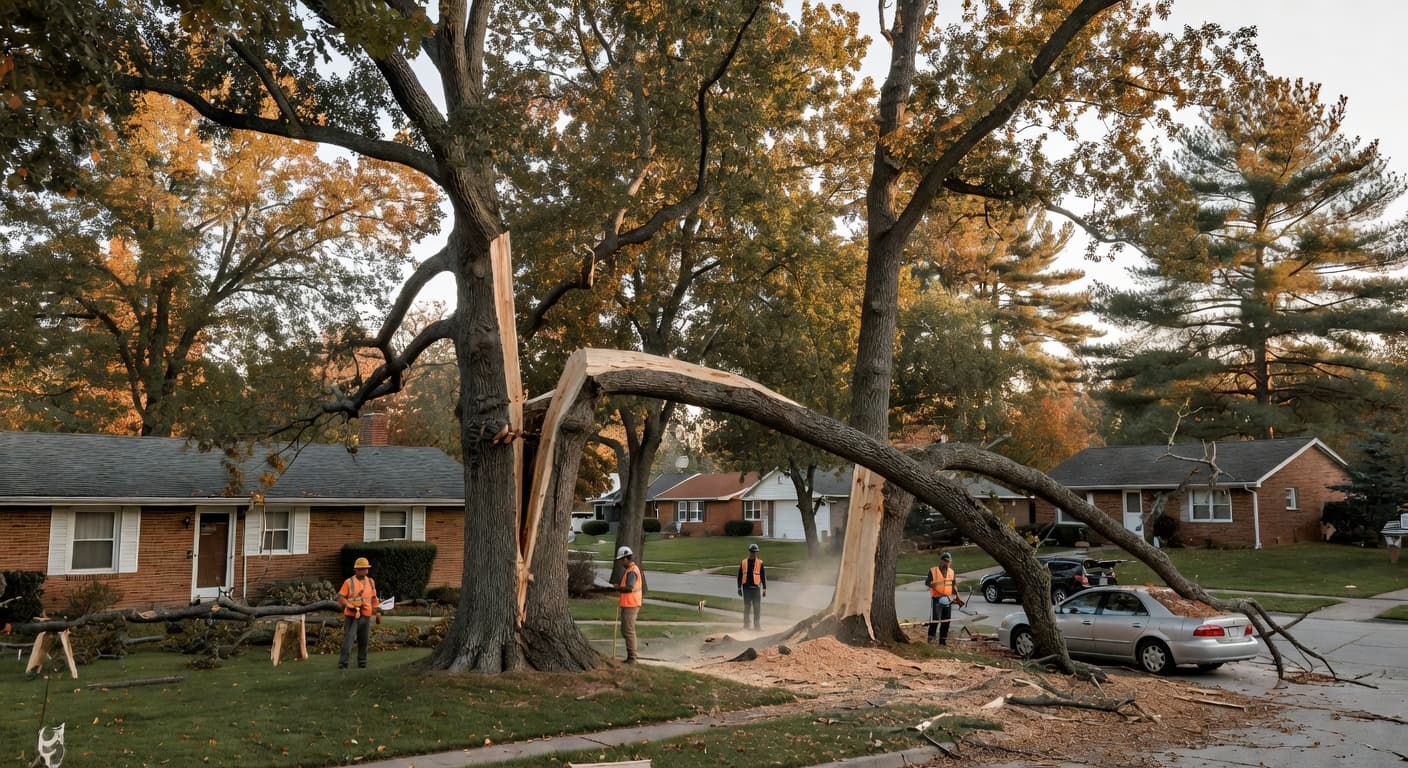
Know Your Trees, Protect Your Property
Walk into any Mid-Michigan neighborhood and you'll see a dozen different tree species within a block. Oaks, maples, pines, ashes - they all look like "just trees" to most homeowners.
But here's what professionals know: Each species has different risks, different lifespans, different structural weaknesses, and different maintenance needs.
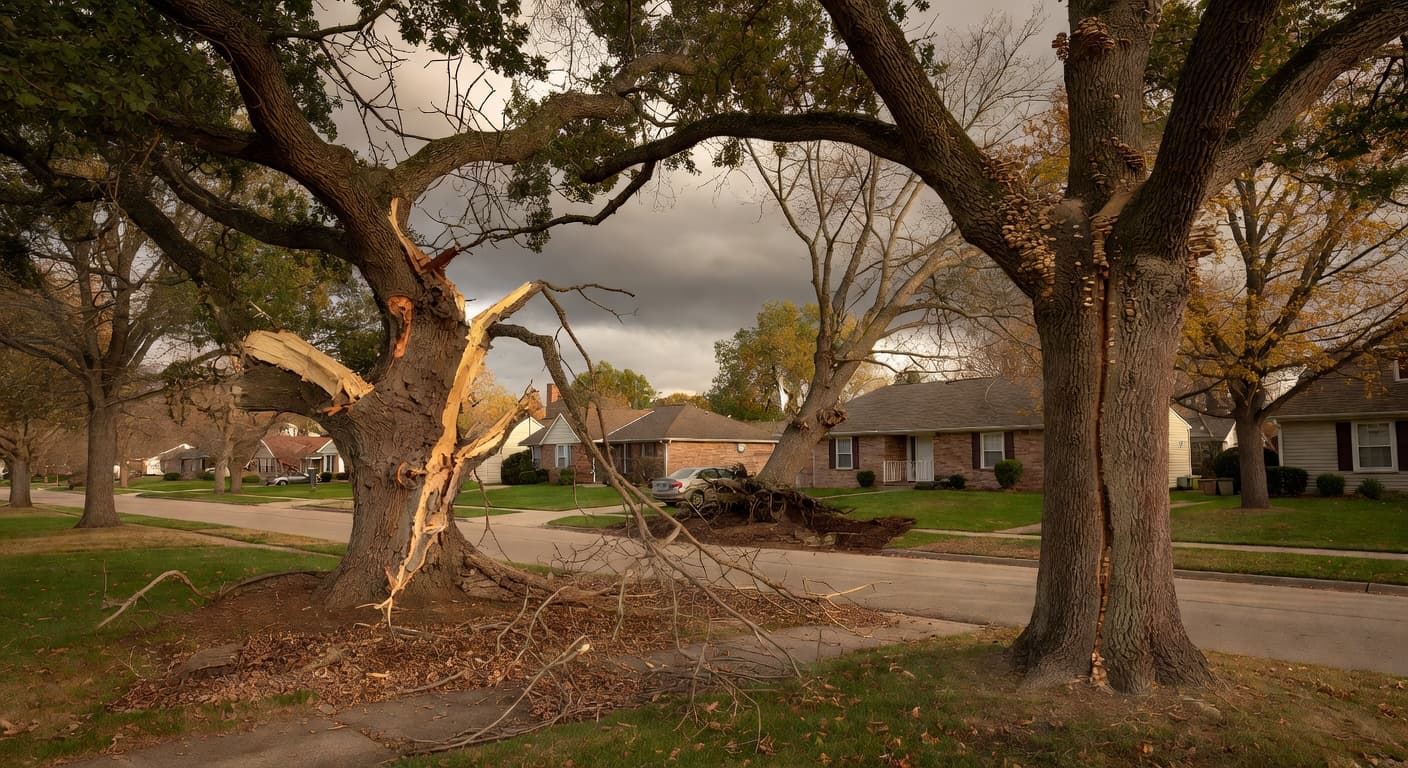
That oak in your front yard? It might live 200 years and withstand any storm. That ash tree near your driveway? It could be a ticking time bomb if emerald ash borer hasn't been treated. That beautiful silver maple shading your deck? It might be sending roots toward your foundation right now.
After 20+ years working with every tree species in Lansing, Onondaga, Mason, and across Mid-Michigan, we've learned which trees reward your care - and which ones quietly threaten your property.
This guide covers the species you're most likely to encounter, how to identify them, and what risks each presents.
Free: Michigan Tree Identification Field Guide
Download the printable guide with photos, identification keys, and risk factors for 25 common Michigan tree species.
The Dangerous Dozen: High-Risk Michigan Trees
These species require the most vigilance and maintenance in our region.
1. Ash Trees (Fraxinus spp.)
Why they're dangerous: Emerald Ash Borer (EAB) has devastated Michigan's ash population. If you have an ash, it needs immediate attention.
Identification:
- Leaves: Compound, 5-11 leaflets, opposite arrangement
- Bark: Diamond-pattern ridges (mature), smooth (young)
- Seeds: Paddle-shaped samaras ("keys")
- Branches: Opposite arrangement (rare in trees)
Risk factors:
- EAB kills untreated ash within 2-4 years of infestation
- Dead ash becomes brittle and dangerous quickly
- Ash can fail suddenly without warning signs
- 95%+ of Michigan ash trees are now affected
Action required:
| Condition | Action | Timeline |
|---|---|---|
| Healthy, treated | Continue treatment | Annual |
| Declining but alive | Remove or treat immediately | Weeks |
| Recently dead | Remove ASAP | Days |
| Long dead | Emergency removal | Immediate |
See our tree removal cost guide for pricing information.
Mid-Michigan prevalence: Very common - most established neighborhoods have multiple ash trees
Have an Ash Tree? Get Free EAB Assessment.
Call or text today. We'll assess your trees, explain your options, and give you a fair price. No pressure. No obligation.
Serving Onondaga, Lansing, and all of Mid-Michigan - same-day responses
2. Silver Maple (Acer saccharinum)
Why they're dangerous: Aggressive root systems, weak wood, and included bark make them prone to structural failure.
Identification:
- Leaves: Deeply lobed, silvery underside, 5 main lobes
- Bark: Shaggy, flaky on mature trees
- Seeds: Large samaras that helicopter down in spring
- Growth: Very fast, aggressive spread
Risk factors:
- Root systems can spread 50+ feet, damaging foundations
- Weak branch attachments prone to failure
- Fast growth equals weak wood structure
- Included bark at branch unions creates weak points
- Invasive root systems seek water sources (pipes, sewers)
Best practice:
- Plant at least 30 feet from structures
- Regular structural pruning every 2-3 years
- Monitor for included bark and weak attachments
- Consider removal if too close to house
3. White Pine (Pinus strobus)
Why they're dangerous: Tall, shallow-rooted, and susceptible to windthrow in Michigan's storms.
Identification:
- Needles: 5 per bundle, soft, 3-5 inches long
- Cones: Long (4-8 inches), curved, without prickles
- Bark: Gray-green on young, deeply furrowed on mature
- Height: Can reach 80-100+ feet
Risk factors:
- Shallow root systems prone to windthrow
- "Sail effect" - large canopy catches wind
- Often planted too close to structures
- Ice storm damage common
- Branch failures in heavy snow
Best practice:
- Requires 40+ feet from structures
- Monitor for root plate lifting after heavy rains
- Structural pruning to reduce sail effect
4. Lombardy Poplar (Populus nigra 'Italica')
Why they're dangerous: Extremely fast growth creates weak structure, aggressive roots, and short lifespan.
Risk factors:
- Weak wood structure due to fast growth
- Short lifespan (30-50 years, then rapid decline)
- Aggressive, spreading root system
- Canker disease common and fatal
- Roots can damage foundations 30+ feet away
Recommendation: Not recommended for residential plantings. If you have mature specimens, monitor closely and plan for removal around year 40.
Need Tree Removal?
Learn more about our professional tree removal service in Onondaga, Lansing, and Mid-Michigan - or call for a free estimate.
5. Willow Trees (Salix spp.)
Why they're dangerous: Insatiable thirst drives roots toward any water source, including your plumbing.
Risk factors:
- Root systems aggressively seek water
- Will damage sewer lines, septic systems, foundations
- Weak wood prone to breakage
- Short lifespan (30-50 years)
Safe distance from structures: Minimum 50 feet from foundations, 30 feet from water lines
6. Box Elder (Acer negundo)
Why they're dangerous: Fast-growing, weak-wooded, invasive, and prone to rot.
Risk factors:
- Box elder bugs - notorious household pest attracted to these trees
- Weak wood structure
- Fast, messy growth
- Often grows as "weed tree" in undesirable locations
- Short lifespan with rapid decline
Recommendation: Generally not worth maintaining. Remove and replace with better species.
7. Siberian Elm (Ulmus pumila)
Why they're dangerous: Invasive, brittle, disease-prone, and aggressive self-seeder.
Risk factors:
- Brittle wood breaks easily in storms
- Elm leaf beetle infestations common
- Dutch elm disease susceptibility
- Invasive - seeds everywhere, crowds out natives
- Weak branch structure
8. Black Walnut (Juglans nigra)
Why they're dangerous: Not structurally dangerous, but toxic to many plants and creates hazardous debris.
Risk factors:
- Juglone toxin in roots/leaves/nuts kills many plants (tomatoes, azaleas, many garden plants)
- Heavy nut drop creates slipping hazard
- Staining from husks damages surfaces
- Large limbs can be hazardous when mature
Management:
- Keep 50+ feet from gardens
- Regular nut cleanup required
- Monitor for branch health
9. Cottonwood (Populus deltoides)
Why they're dangerous: Massive size, aggressive roots, weak wood, and allergenic cotton.
Risk factors:
- Massive root systems damage foundations 50+ feet away
- Weak wood structure in large specimens
- Cotton creates respiratory issues for some people
- Can overwhelm septic systems
- Short lifespan relative to size (70-100 years)
Recommendation: Not for residential properties. If present, monitor closely for structural issues.
10. Norway Maple (Acer platanoides)
Why they're dangerous: Invasive, shallow-rooted, and creates dense shade that kills lawns and understory plants.
Risk factors:
- Invasive - crowds out native species
- Shallow root systems compete with lawns
- Dense shade prevents grass growth
- Poor structural form as it ages
- Infestation by Asian longhorned beetle risk
11. Bradford Pear (Pyrus calleryana 'Bradford')
Why they're dangerous: Terrible branch structure guarantees failure as trees mature.
Risk factors:
- Included bark at all major branch unions
- Weak attachment points guarantee failure
- Short lifespan (15-25 years before major failures)
- Invasive - cultivars cross-breed and spread
- Not worth the risk - guaranteed to fail
Recommendation: Remove and replace. These trees are disasters waiting to happen.
12. Mimosa/Silk Tree (Albizia julibrissin)
Why they're dangerous: Invasive, weak-wooded, short-lived, and seeds prolifically.
Risk factors:
- Seeds everywhere - invasive weed tree
- Weak wood prone to breakage
- Short lifespan (20-30 years)
- Attracts webworms
- Roots can damage foundations
Recommendation: Remove and replace with native alternatives. The flowers are not worth the problems.
The Reliable Species: Lower-Risk Michigan Trees
These species present fewer risks and are generally good landscape choices.
Red Oak (Quercus rubra)
Why they're reliable: Strong wood, long lifespan, beautiful, and manageable risks.
Risk factors to manage:
- Oak wilt susceptibility (preventable with proper timing)
- Large size requires space
- Acorn drop in fall
Best practices:
- Plant 30+ feet from structures
- Never prune April-October (oak wilt prevention)
- Monitor for oak wilt symptoms
- Regular structural pruning when young
Lifespan: 200-300+ years with care
Sugar Maple (Acer saccharum)
Why they're reliable: Strong wood, beautiful fall color, deep root system, long life.
Risk factors to manage:
- Verticillium wilt (rare but serious)
- Shallow roots can lift sidewalks if too close
- Salt sensitivity (don't plant near roads)
Best practices:
- Plant 20+ feet from foundations/sidewalks
- Monitor for verticillium symptoms (sudden branch dieback)
- Avoid soil compaction
Lifespan: 150-250+ years
White Oak (Quercus alba)
Why they're reliable: Extremely strong wood, deep roots, very long-lived.
Risk factors: Minimal when properly located
Best practices:
- Plant 40+ feet from structures (large canopy)
- Follow oak wilt prevention protocols
- Long-term tree - plan for its mature size
Lifespan: 300-600 years
Kentucky Coffee Tree (Gymnocladus dioicus)
Why they're reliable: Native, tough, pollution-tolerant, unique appearance.
Risk factors: Minimal
Best practices:
- Large tree needs space
- Pods can be messy (male cultivars available)
- Good urban tree
Lifespan: 100-150 years
Need Tree Trimming & Pruning?
Learn more about our professional tree trimming & pruning service in Onondaga, Lansing, and Mid-Michigan - or call for a free estimate.
Identification Tips for Homeowners
Using the LEAF Method
L = Leaves - The most reliable identification feature
- Shape (lobed, needle, scale, compound?)
- Arrangement (alternate vs. opposite on branch)
- Margin (smooth, toothed, lobed?)
E = Environment - Where is the tree growing?
- Wetland, upland, urban, forest?
- Soil type (clay, sand, loam)?
- Sun exposure?
A = Arrangement - How are parts arranged?
- Branch pattern (opposite vs. alternate)?
- Bark texture and pattern?
- Crown shape?
F = Fruit/Flowers - Reproductive parts
- Seeds, nuts, cones, samaras?
- Flower type, color, timing?
When to Call a Professional for Identification
Call us when:
- You are not sure what species you have
- You are concerned about a tree's health or safety
- You need guidance on care or removal
- You are planning construction near mature trees
- You suspect disease or pest issues
Need Tree Identification? Free Professional Assessment.
Call or text today. We'll assess your trees, explain your options, and give you a fair price. No pressure. No obligation.
Serving Onondaga, Lansing, and all of Mid-Michigan - same-day responses
Species-Specific Maintenance Calendars
For High-Risk Trees (Ash, Silver Maple, Willow, etc.)
| Season | Action |
|---|---|
| Spring | Health assessment, check for pests/disease |
| Summer | Structural pruning, monitor for included bark |
| Fall | Prepare for winter, cabling if needed |
| Winter | Best time for major pruning (dormant season) |
For Oaks (Special Protocol)
Critical rule: Never prune between April 1 and October 31 in Michigan. See our complete guide on when to trim trees in Michigan.
| Safe Window | Action |
|---|---|
| November 1 - March 31 | Pruning, removal, any cutting |
| April 1 - October 31 | No pruning unless true emergency |
Why: Oak wilt fungus spreads via beetles attracted to fresh wounds. The beetles are active April through October.
The Bottom Line: Species Matter
Not all trees are created equal.
The species in your yard determines:
- How long it will live
- How strong the wood is
- How aggressive the roots are
- What pests and diseases threaten it
- How much maintenance it requires
- What risks it poses to your property
Knowing your trees means:
- Catching problems before they become emergencies
- Planning for maintenance (not just reacting to crises)
- Making informed decisions about planting and removal
- Protecting your property from predictable threats
- Preserving the valuable trees and removing the risky ones
Call (517) 202-3840 for a free tree assessment and species identification in Lansing, Onondaga, Mason, and all of Mid-Michigan.
We will identify what you have, explain the risks, and give you honest guidance on care, maintenance, or removal.
Know your trees. Protect your property. That is the power of species awareness.
Serving Lansing, Onondaga, Mason, Holt, Okemos, Williamston, Charlotte, Eaton Rapids, and all of Mid-Michigan with professional tree identification, assessment, and care.
One company for everything: Species identification, risk assessment, tree removal, trimming, and complete property care.